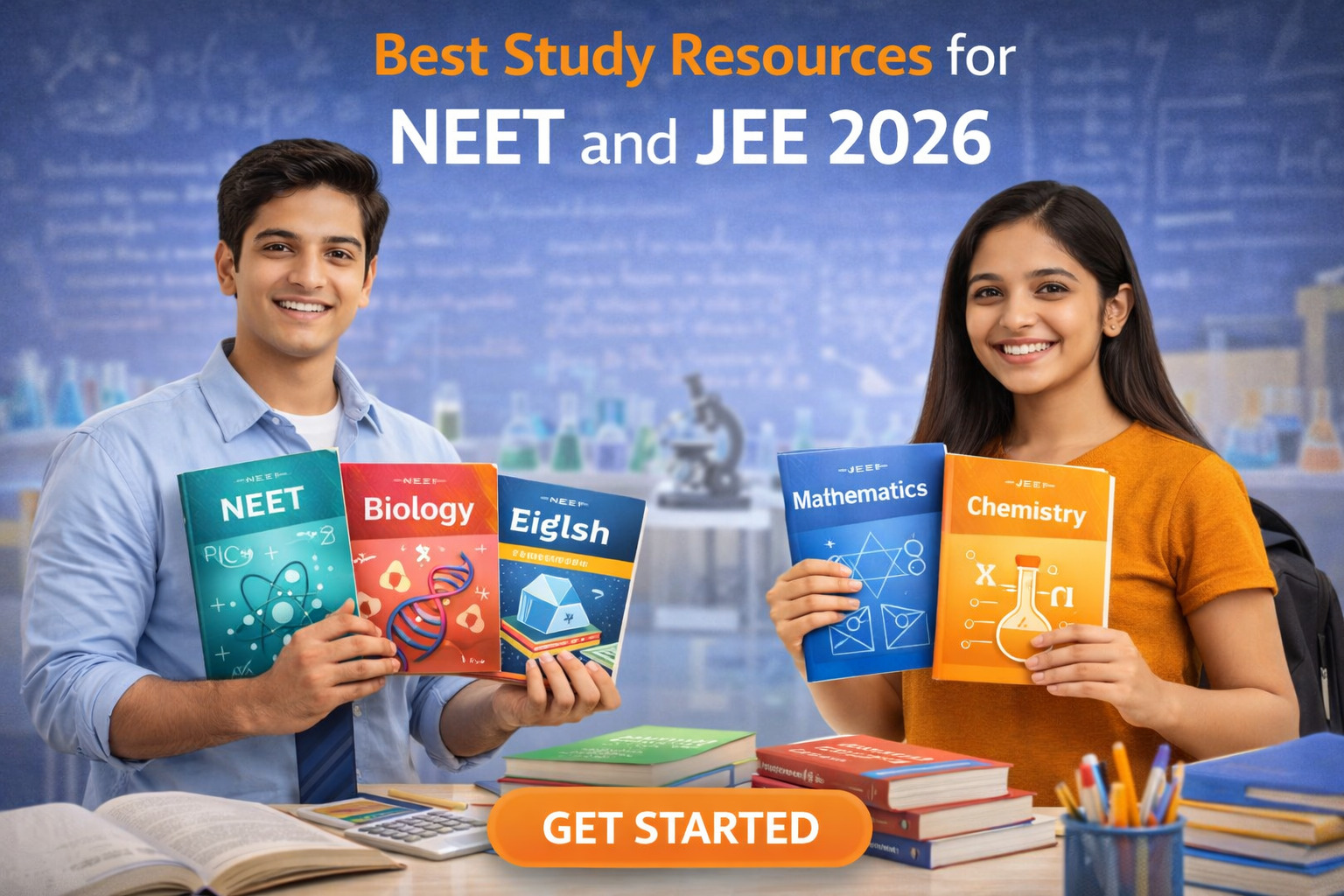
Best Books and Study Materials for NEET & JEE 2026
Books remain the backbone of preparation for both NEET and JEE. NCERT textbooks are the most important starting point, especially for NEET aspirants, as a majority of questions are directly or indirectly based on NCERT concepts. For Physics, Chemistry, and Biology (NEET) or Mathematics (JEE), mastering NCERT ensures conceptual clarity.
For advanced preparation, reference books are essential. Physics aspirants often rely on H.C. Verma for conceptual understanding and D.C. Pandey series for practice. In Chemistry, O.P. Tandon and Morrison & Boyd are widely recommended for Physical and Organic Chemistry respectively. Biology students preparing for NEET benefit from Trueman’s Biology and MTG Objective NCERT series.
JEE aspirants should focus heavily on problem-solving. Books like I.E. Irodov for Physics, Cengage series for Mathematics, and Narendra Awasthi for Physical Chemistry are considered top-tier. However, it’s important not to overload yourself with too many resources. Select a few reliable books and revise them multiple times.
In addition to books, coaching modules (if enrolled in coaching institutes) are extremely valuable. These modules are designed specifically for exam patterns and provide structured learning along with practice questions.
Online Platforms, Mock Tests, and Study Tools
Digital learning has become a crucial part of NEET and JEE preparation. Online platforms offer video lectures, doubt-solving sessions, and adaptive practice tests. Platforms like Unacademy, BYJU’S, and Physics Wallah provide comprehensive courses tailored for both exams.
Mock tests play a vital role in preparation. Regularly attempting full-length mock tests helps students understand exam patterns, manage time effectively, and identify weak areas. Platforms like NTA Abhyas App and Allen Test Series are highly recommended for realistic practice.
Another essential resource is previous years’ question papers. Solving at least 10–15 years of past papers gives insight into frequently asked topics and question trends. It also boosts confidence and accuracy.
Revision tools such as flashcards, short notes, and mind maps can significantly improve retention. Apps like Anki or even handwritten notes can help revise formulas, reactions, and key concepts quickly.
Time management and consistency are equally important. Using planners or study schedules ensures balanced preparation across all subjects. Students should also allocate time for regular revision and doubt clearing.
15 Frequently Asked Questions (FAQs)
1. What is the most important resource for NEET preparation?
NCERT textbooks, especially for Biology and Chemistry, are the most important.
2. Are NCERT books enough for JEE?
They are essential but not sufficient; additional problem-solving books are required.
3. Which is the best Physics book for JEE?
H.C. Verma and I.E. Irodov are highly recommended.
4. How many hours should I study daily?
6–10 hours of focused study is ideal, depending on your schedule.
5. Are online courses helpful for NEET/JEE?
Yes, they provide structured learning and expert guidance.
6. How important are mock tests?
Extremely important for time management and performance analysis.
7. Should I join coaching for NEET/JEE?
It helps, but self-study with the right resources can also be sufficient.
8. How many mock tests should I take per week?
At least 1–2 full-length tests weekly during serious preparation.
9. Is solving previous year papers necessary?
Yes, it helps understand exam trends and improves confidence.
10. Which subject needs more practice for JEE?
Mathematics and Physics require extensive practice.
11. How can I improve weak subjects?
Focus on basics, practice regularly, and seek help for doubts.
12. Are handwritten notes better than digital notes?
Handwritten notes often improve retention, but both methods work.
13. When should I start revision?
Revision should be ongoing, not just at the end.
14. How to manage stress during preparation?
Take breaks, exercise, and maintain a balanced routine.
15. Can I crack NEET/JEE without coaching?
Yes, with discipline, the right resources, and consistent practice.




