Education has always been considered the strongest foundation for a secure future. Every student dreams of studying without worrying about money, but the reality is often different. School fees, college tuition, hostel charges, books, online classes, internet costs, and coaching expenses together create a heavy financial burden for many families. This is where government scholarships become a blessing.
In India, one of the most important scholarship platforms for students is the National Scholarship Portal (NSP). For the academic year 2026–27, NSP will once again play a crucial role in helping lakhs of students continue their education without financial stress.
This blog is written to answer every common question students and parents have about NSP. From understanding what NSP is, who can apply, what documents are required, how the application process works, and what mistakes to avoid, everything is explained here in simple, human-friendly language. We have also included how Suganta Tutors Connect helps students at every step and a detailed FAQ section to clear all doubts.
Understanding the National Scholarship Portal (NSP)
The National Scholarship Portal is an official digital platform launched by the Government of India to bring multiple scholarship schemes under one system. Earlier, students had to visit different offices, fill separate forms, and follow different procedures for different scholarships. NSP simplified this entire process by creating one online portal where students can apply for most government scholarships.
The portal is designed to ensure transparency, fairness, and speed. Every application goes through online verification, and scholarship money is transferred directly into the student’s bank account through Direct Benefit Transfer. This reduces corruption, middlemen, and delays.
NSP includes scholarships offered by various central ministries, state governments, and government-supported institutions. It supports students from school level to higher education, including professional and technical courses.
Why NSP Is Important for Students in 2026–27
Education costs are increasing every year, even in government institutions. For many families, continuing education after Class 10 or Class 12 becomes difficult due to financial reasons. NSP scholarships help bridge this gap.
For school students, scholarships help cover basic education expenses and reduce dropout rates. For college and university students, they help with tuition fees, hostel expenses, books, and daily academic needs. For professional course students, scholarships often decide whether a student can complete their degree or not.
In 2026–27, competition for scholarships is expected to be even higher. Proper awareness and correct application will be the key to success.
Who Can Apply for NSP 2026–27
Any Indian student studying in a recognized school, college, or university can apply for scholarships through NSP, provided they meet the eligibility criteria of the specific scheme. Eligibility usually depends on factors such as family income, category, academic performance, course level, and institution type.
Some scholarships are meant for students from economically weaker backgrounds, while others focus on merit. There are scholarships for SC, ST, OBC, Minority communities, general category students, and students with disabilities. There are also scholarships specifically designed for girls to promote education.
Students must carefully read the eligibility conditions before applying. Applying for a scholarship without meeting eligibility requirements can result in rejection.
Types of Scholarships Available on NSP
NSP covers a wide range of scholarships. Pre-Matric scholarships support students studying in school, usually from Class 1 to Class 10. Post-Matric scholarships are for students studying in Class 11, Class 12, graduation, post-graduation, and higher education.
Merit-cum-Means scholarships are meant for students who perform well academically but come from low-income families. Central Sector Scholarships support meritorious students at the national level. Top Class Education scholarships are designed for students studying in prestigious institutions.
Each scholarship has its own income limit, academic requirements, and conditions. Understanding these details is essential before applying.
One-Time Registration (OTR): A Mandatory Step
For NSP 2026–27, One-Time Registration is compulsory for all students. OTR creates a permanent profile for the student on the NSP portal. Without completing this step, no scholarship application can be submitted.
During OTR, students need to verify their identity using Aadhaar-based e-KYC and face authentication. This process ensures that the scholarship reaches the correct beneficiary and prevents duplication.
Once OTR is completed, the student receives a unique OTR ID and password. This ID remains the same for future years as well and is used for all NSP applications.
Students should ensure that the details entered during OTR match exactly with their Aadhaar card, especially name, date of birth, and gender.
Step-by-Step Application Process for NSP 2026–27
After completing One-Time Registration, students can proceed with the application. The application process begins by logging into the NSP portal using the OTR ID and password. Students then select the academic year 2026–27 and choose whether they are applying as a fresh applicant or renewing an existing scholarship.
The application form requires students to enter personal details, academic information, family income details, and bank account information. Every section must be filled carefully. Even small mistakes, such as spelling errors or incorrect bank account numbers, can cause problems later.
After filling in the details, students are required to upload scanned copies of the necessary documents. Once everything is reviewed and confirmed, the application can be submitted. It is strongly recommended to save or print the submitted application for future reference.
Documents Required for NSP 2026–27
Documents play a crucial role in the scholarship process. Most NSP scholarships require similar basic documents, although some schemes may ask for additional papers.
Aadhaar card is required for identity verification. The Aadhaar should be linked with a mobile number to receive OTPs. The bank account must be in the student’s name and linked with Aadhaar for Direct Benefit Transfer.
Academic documents such as previous year mark sheets are required to verify eligibility and academic performance. Admission proof or fee receipt from the current institution is needed to confirm that the student is actively studying.
Income certificates are required for most need-based scholarships. These certificates must be issued by a competent authority and should be valid as per the scholarship guidelines. Category certificates are required for students belonging to SC, ST, OBC, or Minority communities.
Students with disabilities applying under special schemes must submit a valid disability certificate. In some cases, domicile or bonafide certificates may also be required.
All documents should be scanned clearly, without blur, and uploaded in the correct format and size.
Verification Process After Application Submission
Once the application is submitted, it goes through multiple stages of verification. First, the educational institution verifies the student’s details and documents. After that, the application is forwarded to the state or district nodal officer. Some scholarships also require verification at the central ministry level.
Only after all verification stages are completed successfully is the scholarship approved. The scholarship amount is then transferred directly to the student’s bank account.
If there is any discrepancy in the application or documents, the application may be marked defective or rejected. Students should regularly check their application status on the NSP portal and respond quickly if corrections are required.
Common Mistakes Students Should Avoid
Many students lose scholarships due to simple mistakes. Using an incorrect bank account, entering wrong Aadhaar details, uploading unclear documents, or missing deadlines are common issues.
Another major mistake is waiting until the last date to apply. Technical issues, server problems, or document errors can delay submission. Students should apply as early as possible to avoid unnecessary stress.
Students should also avoid guessing information. If unsure about any detail, it is better to confirm before entering it in the application.
How Suganta Tutors Connect Helps Students with NSP
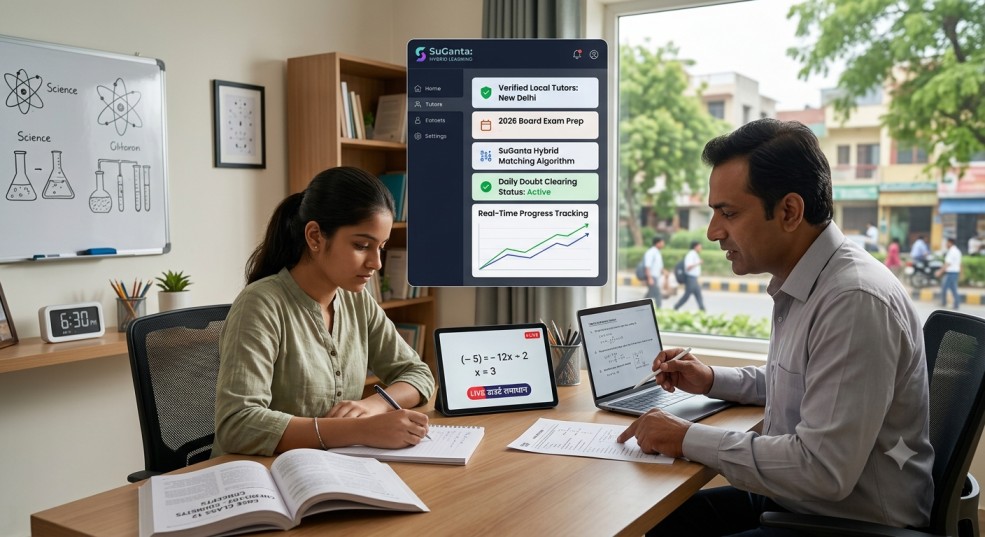
Applying for NSP scholarships can be confusing, especially for first-time applicants or students from rural and semi-urban backgrounds. Suganta Tutors Connect plays an important role in guiding students through this process.
Suganta Tutors Connect helps students understand which scholarships they are eligible for and explains the complete application process in simple terms. Students receive guidance on One-Time Registration, document preparation, and application submission.
By connecting with Suganta Tutors Connect, students can avoid common mistakes, save time, and increase their chances of successful scholarship approval. The focus is on making the process stress-free and student-friendly.
Frequently Asked Questions (FAQs)
What is NSP and who manages it?
NSP is an official scholarship portal managed by the Government of India to provide financial support to students through various scholarship schemes.
Is One-Time Registration compulsory for NSP 2026–27?
Yes, OTR is mandatory for all students applying for scholarships on NSP.
Can a student apply for multiple scholarships in one year?
No, a student can apply for only one scholarship scheme per academic year.
How will the scholarship money be paid?
The scholarship amount is transferred directly to the student’s Aadhaar-linked bank account through Direct Benefit Transfer.
What should I do if my application is rejected?
If rejected, students should check the reason mentioned and ensure correct application in the next academic year.
Can Suganta Tutors Connect apply on my behalf?
Suganta Tutors Connect provides guidance and support, but the final submission is done using the student’s own login details.
Final Words
The National Scholarship Portal 2026–27 offers a powerful opportunity for students to continue their education without financial pressure. With correct information, proper documentation, and timely application, students can successfully secure scholarships that support their academic dreams.
If you feel confused or unsure at any stage, Suganta Tutors Connect is there to guide you. Education should never stop due to lack of money, and NSP ensures that deserving students get the support they need.