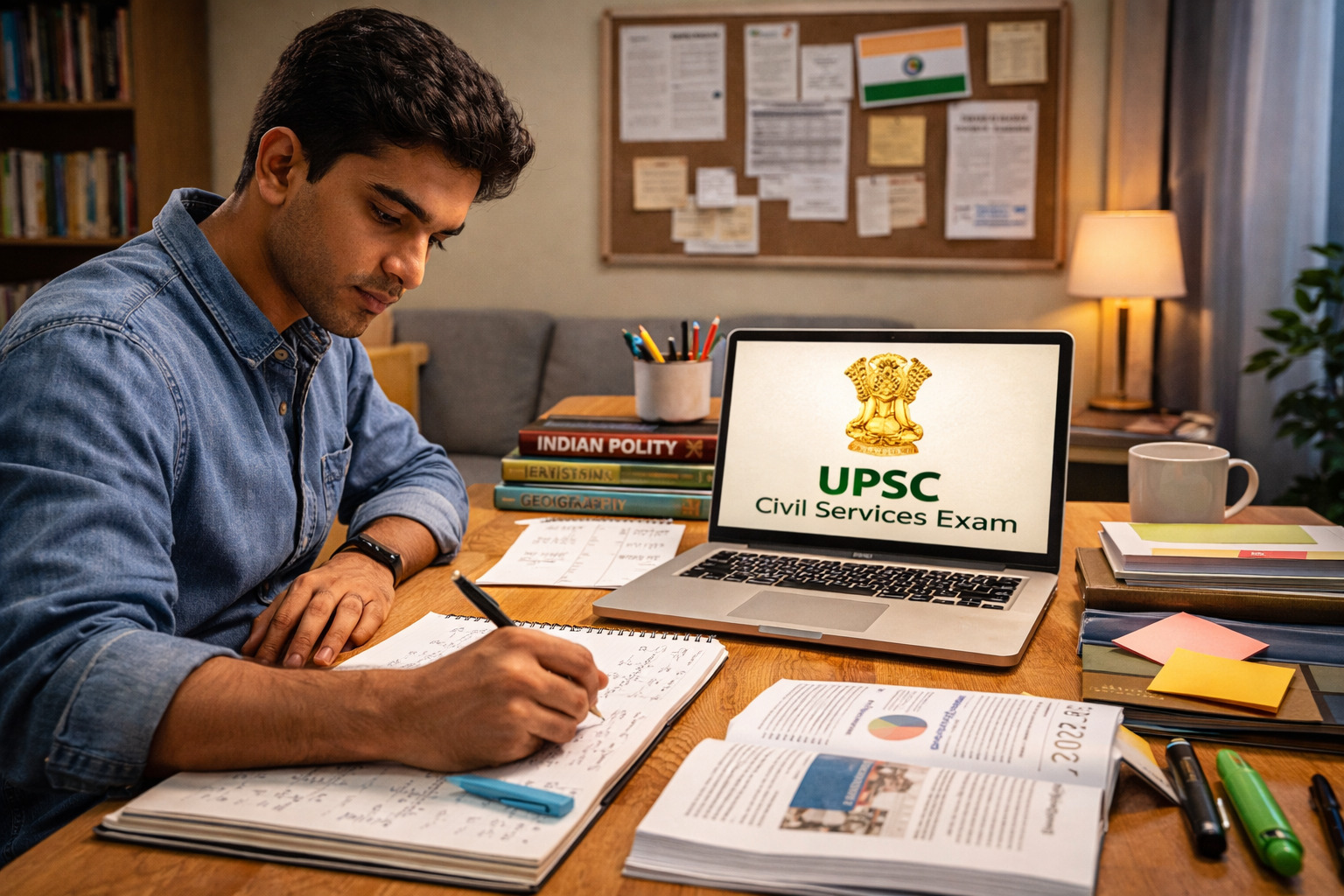
The first step in self-study preparation is to thoroughly understand the UPSC exam pattern and syllabus. The exam is conducted in three stages—Prelims, Mains, and Interview. Each stage requires a different approach, so having clarity from the beginning is essential. Carefully go through the official syllabus and previous year question papers to understand the depth and nature of questions.
Next, build a strong foundation using standard books. NCERT textbooks (Class 6–12) are crucial for basic concepts in subjects like History, Geography, Polity, and Economics. After that, move on to standard reference books such as Laxmikanth for Polity, Spectrum for Modern History, and basic Economy books. Avoid using too many resources; instead, revise the same material multiple times.
Current affairs play a major role in UPSC preparation. Read a good newspaper daily, such as The Hindu or Indian Express, and make concise notes. You can also supplement your preparation with monthly current affairs magazines and government reports.
Time management is another critical factor. Create a realistic daily and weekly timetable that covers all subjects along with revision. Allocate specific time slots for answer writing practice, especially for Mains preparation. Writing structured and concise answers is a skill that improves with practice.
Mock tests are indispensable in self-study. Attempt regular Prelims mock tests to improve accuracy and speed. For Mains, practice answer writing daily and evaluate your answers critically. Self-evaluation and continuous improvement are essential when you are not part of a coaching program.
Effective Strategy and Tips for UPSC Self-Study
To succeed in UPSC without coaching, you need a focused and strategic approach. Start by setting clear goals and breaking the syllabus into manageable parts. Avoid studying everything at once; instead, focus on one subject at a time while revising previously studied topics.
Make short notes during your preparation. These notes will be extremely helpful during revision, especially in the last few months before the exam. Use diagrams, flowcharts, and bullet points to make your notes more effective and easy to recall.
Consistency is the most important factor in self-study. Even studying for 5–6 hours daily with full concentration is better than long, unproductive study sessions. Avoid burnout by taking short breaks and maintaining a healthy lifestyle.
Answer writing practice is crucial for Mains. Focus on structuring your answers with an introduction, body, and conclusion. Use examples, data, and current affairs to enrich your answers. Joining free online answer writing platforms or peer groups can help you get feedback.
Revision should be a continuous process. Without revision, it is difficult to retain the vast UPSC syllabus. Make a revision schedule and stick to it strictly. Revise your notes multiple times to strengthen your memory.
Lastly, stay motivated and patient. UPSC preparation is a long journey that requires mental strength and perseverance. Avoid comparing yourself with others and focus on your own progress. Believe in your preparation and keep improving every day.
FAQs on Cracking UPSC with Self-Study
1. Can I crack UPSC without coaching?
Yes, many candidates clear UPSC through self-study every year.
2. How many hours should I study daily?
5–8 hours of focused study is sufficient.
3. Which books are best for UPSC self-study?
NCERTs, Laxmikanth, Spectrum, and standard reference books.
4. Is current affairs important for UPSC?
Yes, it plays a crucial role in both Prelims and Mains.
5. How to start UPSC preparation at home?
Begin with syllabus, NCERTs, and a proper study plan.
6. Are mock tests necessary?
Yes, they are essential for practice and evaluation.
7. How to prepare for UPSC Mains answer writing?
Practice daily and follow a structured format.
8. Can I crack UPSC in one year?
Yes, with strong dedication and smart strategy.
9. Which newspaper is best for UPSC?
The Hindu or Indian Express.
10. How to stay motivated during preparation?
Set goals, track progress, and take breaks when needed.
11. Is optional subject important?
Yes, it plays a major role in Mains scoring.
12. How to revise effectively?
Make short notes and revise regularly.
13. Do toppers recommend self-study?
Yes, many toppers rely heavily on self-study.
14. Can working professionals crack UPSC?
Yes, with proper time management.
15. How long does UPSC preparation take?
Usually 1–2 years of consistent effort.




