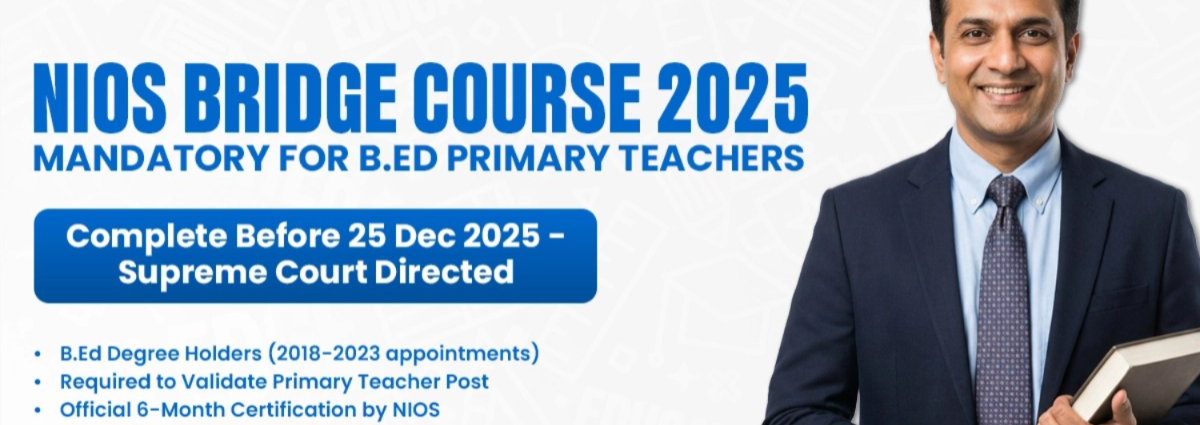
The recent announcement by the National Institute of Open Schooling (NIOS) has brought much-needed relief to thousands of primary school teachers across India. The extension of the registration deadline for the 6-Month Bridge Course in Primary Teacher Education has given educators more time to complete an important requirement linked to their professional eligibility. For many teachers who were feeling anxious due to workload, document issues, or lack of clarity, this decision comes as a much-needed support.
This move by NIOS reflects an understanding of the practical challenges teachers face while balancing classroom responsibilities, administrative work, and personal commitments. It also shows an effort to ensure that no eligible teacher is left behind due to technical or timing issues.
Understanding the 6-Month Bridge Course
The 6-Month Bridge Course in Primary Teacher Education is a specially designed programme introduced for in-service teachers who were appointed with a B.Ed. qualification but are teaching at the primary level. Over the years, education authorities have emphasized that teaching young learners requires specialized pedagogical skills that focus on foundational learning, child psychology, and classroom engagement.
This course bridges the gap between general teacher training and the specific needs of primary education. It is not meant to replace a degree but to strengthen a teacher’s understanding of early childhood learning methods and classroom practices that are suitable for young learners.
The course is conducted through Open and Distance Learning (ODL) mode, making it accessible to working teachers across the country. This flexible format allows teachers to continue their jobs while completing academic requirements at their own pace.
Why the Deadline Extension Matters So Much
The extension of the registration deadline has come as a major relief, especially for teachers working in rural and semi-urban areas. Many educators faced difficulties such as limited internet access, incomplete documentation, or confusion regarding eligibility criteria. Others were simply overwhelmed by school responsibilities and could not complete the process on time.
By extending the deadline, NIOS has ensured that teachers get a fair opportunity to register without unnecessary pressure. This decision acknowledges the real challenges faced by educators and reinforces the importance of supporting them rather than penalizing them.
For many teachers, this extension also offers peace of mind. It allows them to plan properly, gather documents, understand the course structure, and register confidently rather than rushing through the process.
Who Should Apply for the Bridge Course?
This course is meant for in-service primary teachers who were appointed with a B.Ed. qualification during the specified period mentioned by NIOS. These teachers are required to complete the bridge course to continue their service without complications.
The course is not meant for new aspirants or those planning future appointments. Instead, it focuses on regularizing and strengthening the skills of existing teachers who are already part of the education system. Completing the course helps ensure compliance with national education guidelines and strengthens professional credibility.
Why This Course Is Important for Teachers
Many teachers wonder why this course is necessary when they already hold a B.Ed. degree. The reason lies in the nature of primary education itself. Teaching young children requires a different approach compared to teaching higher classes. It involves understanding child psychology, language development, early numeracy skills, and emotional development.
The bridge course helps teachers gain practical insights into these areas and improves classroom effectiveness. It also aligns teaching methods with the objectives of foundational education as outlined in national education reforms.
Beyond professional development, completing the course also protects teachers from future administrative or eligibility-related complications. It ensures continuity in service and recognition within the education system.
How Suganta Tutors Supports Teachers During This Process
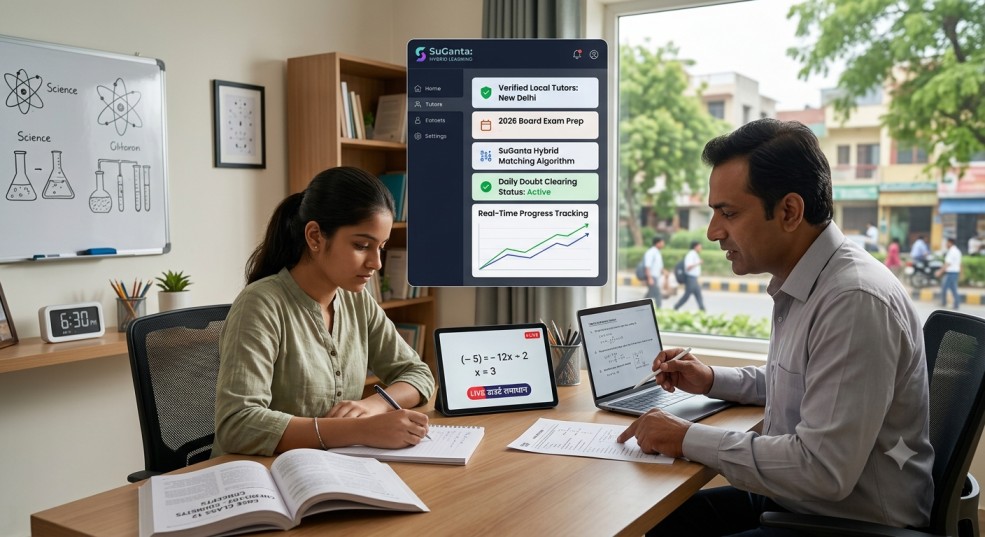
At Suganta Tutors, we understand that teachers often juggle multiple responsibilities. From managing classrooms to handling administrative tasks, finding time for additional courses can be challenging. That’s why Suganta Tutors focuses on supporting educators at every step of their professional journey.
We help teachers understand course requirements, clarify doubts related to eligibility, and guide them through academic improvement. Our platform focuses on strengthening teaching skills, improving subject clarity, and enhancing classroom delivery—skills that are especially valuable when completing professional training like the bridge course.
Suganta Tutors also supports educators with learning resources, structured guidance, and continuous motivation, helping them grow with confidence and clarity.
Why Completing This Course Matters for Your Career
Completing the 6-month Bridge Course is not just a formality—it plays an important role in safeguarding your professional future. It ensures compliance with educational regulations and demonstrates your commitment to quality teaching.
Teachers who complete this course are better equipped to handle classroom challenges, adapt to new teaching methods, and meet institutional expectations. In the long run, this contributes to job stability, professional growth, and improved teaching standards.
Final Thoughts
The extension of the NIOS 6-Month Bridge Course deadline is a welcome step for teachers across the country. It offers valuable time to prepare, apply, and complete an important professional requirement without unnecessary pressure.
If you are eligible, make use of this opportunity wisely. Prepare your documents, understand the process, and move forward with confidence. And if you need guidance, academic support, or teaching resources, Suganta Tutors is always there to support your journey.
This is not just about completing a course—it’s about strengthening your role as an educator and shaping the future of young learners across the country.