Let's be honest, exams are stressful. And looking at a computer test like the PTE can feel pretty scary at first.
But here’s the good news: the PTE is actually one of the friendlier English tests out there. You don't need to use big, fancy words to get a high score. You just need to understand how the "game" works.
This guide will break it all down in plain English, so you can stop worrying and start preparing.
What is the PTE, Anyway?
Think of the PTE as a computer program that checks how well you use English. You don't have to sit in front of a stern examiner. It's just you, a computer, and a headset.
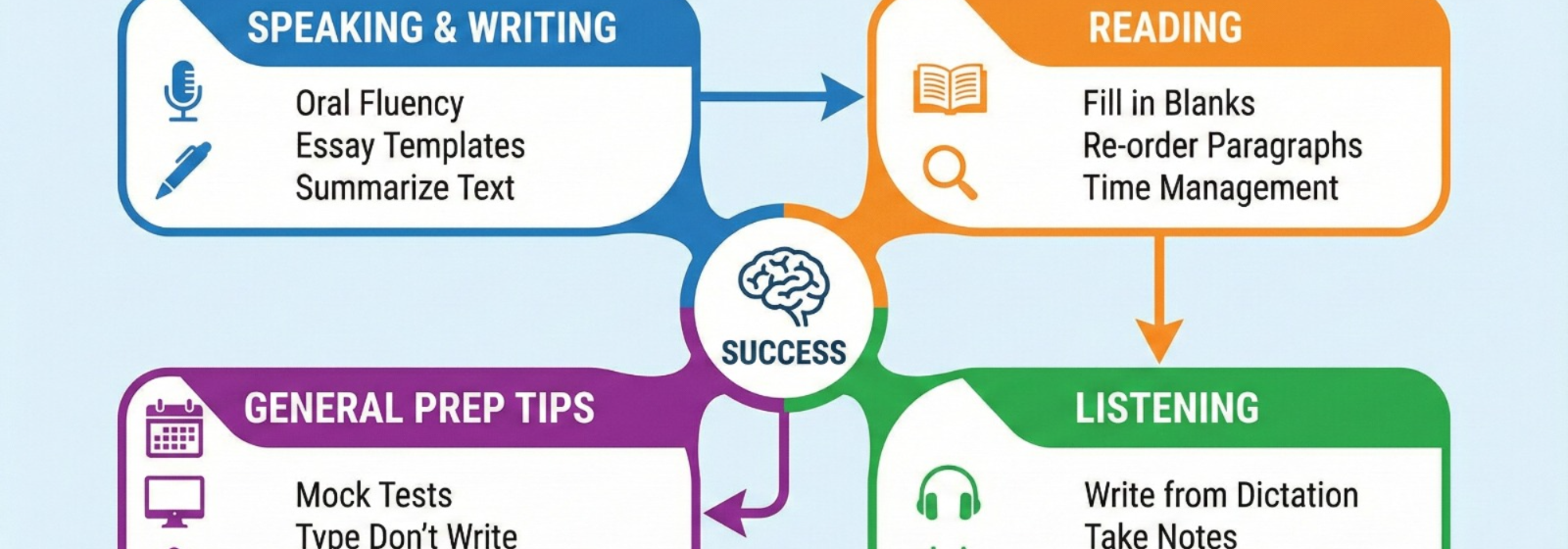
The test has three main parts and takes about two hours:
Speaking & Writing: You talk into a microphone and type out some answers.
Reading: You read text on the screen and fill in gaps or re-order sentences.
Listening: You listen to audio clips and answer questions about what you heard.
The cool thing is that some questions test two skills at once. For example, listening to a sentence and then writing it down tests both your listening and your writing.
Simple Tricks for Each Part
1. Speaking: Just Keep Talking!
Don't worry about having a "perfect" accent. The computer just needs to understand you clearly.
Speak normally: Don't shout and don't whisper. Just speak at a steady, natural pace.
The Golden Rule: Never be silent for more than 3 seconds. If you stop talking, the microphone turns off! Even if you make a small mistake, just keep going.
Need a practice partner? It really helps to practice talking with a real person first. You can find friendly tutors at SuGanta Classes who will listen and help you feel more confident.
2. Writing: Keep It Clear
You don't need to write like a professor. Simple, clear sentences are best.
Stick to the point: If they ask you to summarize a text in one sentence, don't write a paragraph.
For the essay: Have a simple plan in your head before you start typing: an introduction, one or two main points, and a short conclusion.
Check your spelling: A quick read-through at the end can save you points.
3. Reading: Don't Get Stuck
This part can feel fast because of the timer.
If you see a hard word you don't know, don't panic. Try to guess its meaning from the rest of the sentence.
For "Fill in the Blanks," read the whole sentence first. Usually, one word will just "sound right" in the gap. Trust your gut feeling.
4. Listening: Focus is Key
You only get to hear the audio recordings once, so you need to pay close attention.
The most important question: There is a task called "Write from Dictation." You hear a sentence and have to type it exactly as it was said. This gives you a lot of points, so practice this one a lot!
Take quick notes: When listening to longer clips, jot down key words on your erasable notepad so you don't forget the main idea.
Frequently Asked Questions (FAQ)
Q: Is the PTE harder than IELTS? A: Most people actually find PTE easier because a computer marks you, not a human. The computer doesn't care about your handwriting or your opinion; it just checks your English.
Q: Can I prepare for this at home? A: Absolutely. Since the test is on a computer, practicing on your own laptop is the best way to study. Just make sure you get good practice materials from the Suganta Store so you aren't wasting time on bad questions.
Q: How long does it take to get my results? A: It is super fast. Most people get their scores in about 2 days (48 hours). Sometimes it even comes in a few hours!
Q: Do I need a fancy vocabulary? A: Not really. It is better to use simple words correctly than to use big words wrongly. Clarity is king.
Q: I'm really nervous about speaking. What should I do? A: Nerves are normal! The best way to beat them is practice. If talking to a computer feels weird, try booking a session with a real tutor at SuGanta Tutors to get comfortable speaking out loud first.
You've Got This!
Passing the PTE isn't about being a genius. It's about practicing the right things. With a little bit of consistent effort and helpful resources from places like SuGanta, you can absolutely get the score you need for your visa or university application.
Take a deep breath, make a simple plan, and start practicing. Good luck!