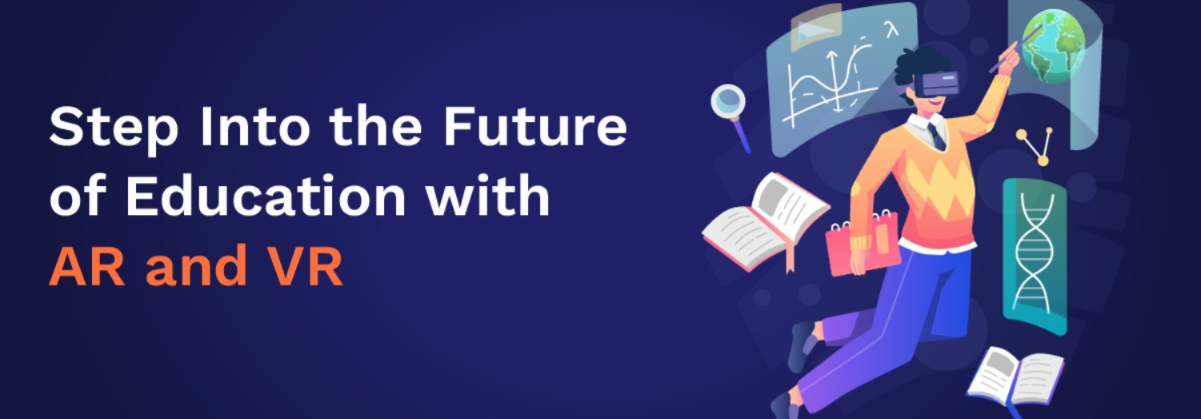
Education is no longer just about reading textbooks and listening to lectures. Technology is changing everything — from how students learn to how teachers teach. Among these new innovations, Virtual Reality (VR) and Augmented Reality (AR) are making a big impact. Together, they are creating what we call Immersive Learning, which makes education more exciting, interactive, and effective.
In this blog, we’ll explore how VR and AR are transforming classrooms, how they work differently, and how platforms like Suganta Tutors are helping teachers and students make the most of this new era in education.
What is Virtual Reality (VR) in Education?
Virtual Reality (VR) is like stepping into another world without actually leaving your classroom. It uses a special headset that covers your eyes and takes you into a 3D virtual space where everything looks real — from planets and buildings to human organs and chemical labs.
Imagine being able to explore the solar system while sitting in your classroom. You can see each planet up close, understand their rotation, and feel like you’re floating in space. Or think about walking through a historical monument, not by watching a video, but by actually moving inside it in a 360° environment. That’s the power of VR.
VR allows students to learn by experience. It helps them understand subjects in a more visual and memorable way. Complex topics like human anatomy, physics, or geography become easy to grasp when students can see and interact with them in 3D.
Teachers can also use VR to make lessons more interesting. Instead of explaining theory for hours, they can take students on a virtual tour — whether it’s a science lab, a museum, or even inside a volcano!
Benefits of VR in Education
It helps students see and feel what they’re learning, improving memory and focus.
It turns boring lessons into exciting experiences.
It allows students to explore places they can’t visit physically.
It supports skill-based and practical learning without real-world risks.
Example:
A medical student can practice a surgery virtually without harming anyone. An engineering student can build and test machine parts safely in a virtual lab.
That’s why VR is not just a tool — it’s a game-changer in education.
What is Augmented Reality (AR) in Education?
While VR creates a completely virtual world, Augmented Reality (AR) adds digital content to the real world. You don’t need a headset for this — just a smartphone or tablet camera.
For example, when you point your phone at a picture in your textbook, the image might come alive — showing a 3D model, animation, or video right in front of your eyes. That’s AR!
AR combines real and digital worlds, allowing students to interact with 3D objects while staying in their normal classroom or home environment. It helps make learning visual, interactive, and fun.
Benefits of AR in Education
Makes textbooks interactive and engaging.
Helps students visualize complex topics instantly.
Improves creativity and critical thinking.
Easy to use — works on smartphones, tablets, and even laptops.
Example:
A biology student can see a 3D beating heart hovering over the page and learn how blood flows through it. A geography student can explore the layers of the Earth by simply scanning a diagram.
AR makes learning more accessible and affordable because it doesn’t need expensive tools — only creativity and curiosity.
VR vs AR: The Key Difference
| Feature | Virtual Reality (VR) | Augmented Reality (AR) |
|---|---|---|
| Experience | Fully digital world | Real world + digital layers |
| Equipment | Requires headset | Works with phone/tablet |
| Environment | Immersive 3D simulation | Adds visuals to real surroundings |
| Example | Virtual tour of the solar system | 3D planets appearing on textbook page |
| Purpose | Deep simulation-based learning | Enhanced real-world understanding |
Both VR and AR aim to make learning immersive, but they work in different ways.
While VR replaces the world around you, AR enhances the one you already see. Together, they make learning complete — engaging both imagination and understanding.
Suganta Tutors and the Future of Immersive Learning
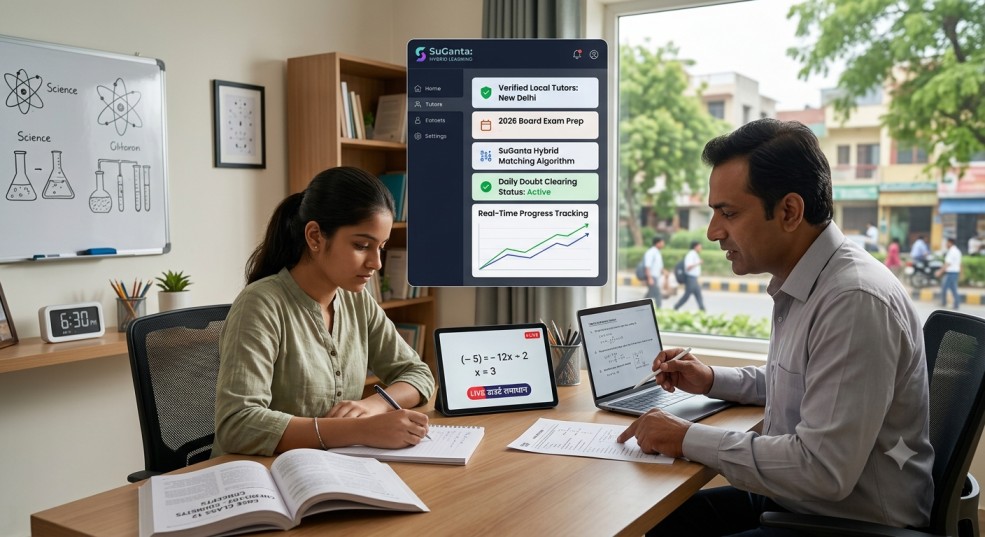
At Suganta Tutors, we believe that great education happens when innovation meets passion. We are building a space where verified teachers and genuine students can connect and grow using modern learning tools like VR and AR.
We encourage our tutors to explore creative teaching methods. For example, a teacher might use VR to explain geography by taking students on a virtual field trip. Another might use AR to demonstrate scientific experiments directly through their smartphone camera.
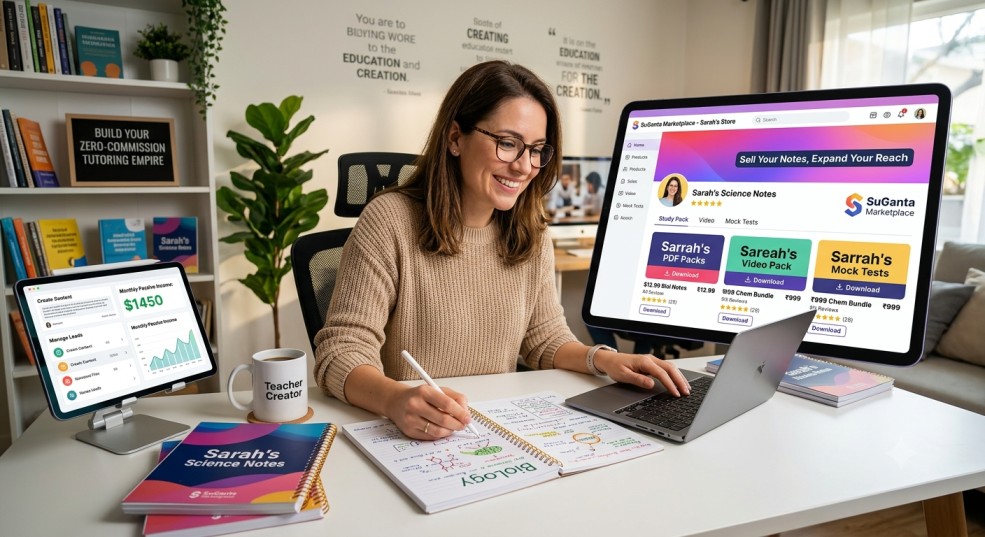
By completing their teaching profiles and portfolios on Suganta Tutors, educators can highlight their ability to use technology and reach more students who value interactive and smart learning.
Our goal is simple:
To make learning real, enjoyable, and accessible for everyone — one immersive experience at a time.
Why Immersive Learning Matters
Immersive learning helps students experience concepts instead of just memorizing them. It builds creativity, confidence, and curiosity — three qualities every learner needs in today’s world.
When teachers use VR and AR together, students don’t just learn facts; they explore, ask questions, and find answers through experience. This form of education not only strengthens understanding but also prepares students for the real world, where technology and knowledge go hand in hand.
Frequently Asked Questions (FAQs)
Q1. What is the main difference between VR and AR in education?
A: VR creates a full 3D virtual environment, while AR adds digital content to the real world. Both make learning more interactive and practical.
Q2. Is immersive learning suitable for all subjects?
A: Yes! Science, history, geography, medicine, art, and even language classes benefit from VR and AR. Teachers can make any subject engaging with these tools.
Q3. How can teachers learn to use VR and AR?
A: Platforms like Suganta Tutors guide and support teachers in adopting modern teaching techniques, including VR and AR-based tools.
Q4. Do students need expensive devices for VR/AR learning?
A: No. Many affordable VR headsets and free AR apps work perfectly on smartphones, tablets, and computers.
Q5. How does Suganta Tutors help students in immersive learning?
A: Suganta Tutors connects students with verified teachers who use creative teaching tools like VR and AR to make classes more visual and effective.
Conclusion
VR and AR are more than just technologies — they are the future of learning. They bring lessons to life, make difficult subjects easier, and spark curiosity in every learner.
At Suganta Tutors, we’re proud to support teachers and students who are ready to embrace this change. Together, we can create a future where learning is not only smarter but also truly immersive and enjoyable.