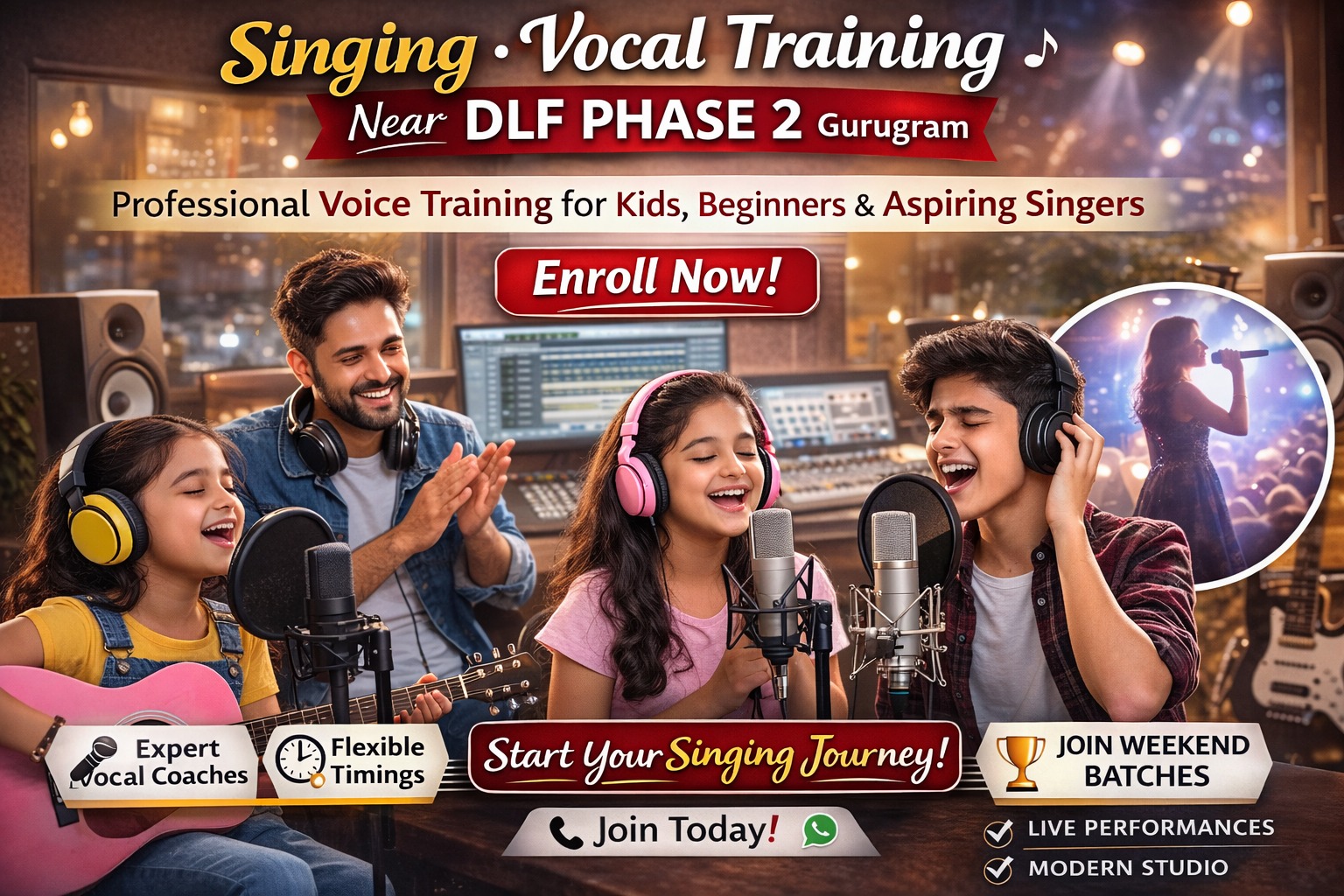
Music is one of the most powerful forms of expression, and singing is one of the most natural ways for people to connect with music. Many people dream of singing beautifully, performing on stage, or simply improving their vocal abilities for personal enjoyment. If you are searching for singing or vocal training near DLF Phase 2, you are already on the right path toward discovering and developing your musical talent.
DLF Phase 2 in Gurugram is a lively and well-connected area where many students, professionals, and music lovers look for high-quality training opportunities. With experienced vocal coaches and structured learning programs, vocal training classes near DLF Phase 2 help students build confidence, improve vocal control, and understand the science behind singing.
Professional singing classes are designed for beginners, intermediate learners, and advanced vocalists. Whether you want to sing Bollywood songs, classical music, western music, or simply develop your voice for stage performances, the right training can help you achieve your goals.
Why Join Singing / Vocal Training Near DLF Phase 2
Many people believe that singing talent is something people are born with, but the truth is that voice training can significantly improve singing ability. Professional vocal training helps singers learn the correct techniques required to control pitch, tone, and breathing.
Joining singing classes near DLF Phase 2 Gurugram allows students to receive guidance from experienced instructors who understand voice development. A trained instructor helps identify the strengths and weaknesses of each student and creates personalized exercises to improve vocal quality.
Another advantage of professional vocal training is that students learn how to protect their voices. Incorrect singing techniques can strain vocal cords, but proper training teaches students how to sing safely and sustainably.
Students who enroll in structured vocal training programs also gain opportunities to perform in music events, competitions, and live performances, which helps build stage confidence.
What You Will Learn in Vocal Training Classes
Professional vocal training near DLF Phase 2 focuses on both technical skills and artistic expression. Students learn the science of voice production, breathing control, and vocal projection.
One of the first things students learn is breathing techniques, which are essential for maintaining vocal stability and controlling long musical phrases. Breath control exercises help singers sustain notes and sing with better clarity.
Students also learn about pitch control and voice modulation, which helps them sing in tune and develop a unique vocal style.
Advanced training includes learning vocal range expansion, harmonization techniques, and musical interpretation. These skills help singers perform songs with emotion and creativity.
Regular practice sessions help students strengthen their vocal cords and develop consistency in their singing.
Types of Singing / Vocal Training Courses
Different types of vocal training programs are available depending on the musical style and skill level of the student.
Beginner Vocal Training
Beginner classes focus on the basics of singing. Students learn about voice warm-ups, breathing exercises, pitch control, and simple songs.
Intermediate Singing Classes
Intermediate classes help students refine their vocal techniques. They learn advanced vocal exercises, harmonies, and more complex songs.
Advanced Vocal Training
Advanced classes focus on performance skills, voice dynamics, and professional singing techniques.
Students also learn how to perform confidently on stage and record songs professionally.
Music Styles Covered in Vocal Training
Many singing classes near DLF Phase 2 offer training in different musical styles to suit the interests of students.
Students can learn Bollywood singing, classical vocal music, western vocal training, pop music, and devotional music.
Classical training often focuses on voice discipline and musical theory, while western vocal training emphasizes harmony and contemporary singing styles.
This variety allows students to explore different genres and develop their own musical identity.
Benefits of Professional Vocal Training
Learning singing under the guidance of professional instructors provides many advantages.
One of the most important benefits is improved vocal confidence. Many people hesitate to sing in front of others, but regular training helps overcome stage fear.
Another benefit is better vocal health. Vocal training teaches singers how to warm up their voices properly and avoid strain.
Students also develop musical knowledge, including rhythm, melody, and song interpretation.
For children and teenagers, singing training improves creativity and communication skills. For adults, singing often becomes a relaxing hobby that reduces stress and improves emotional well-being.
Vocal Training Course Overview
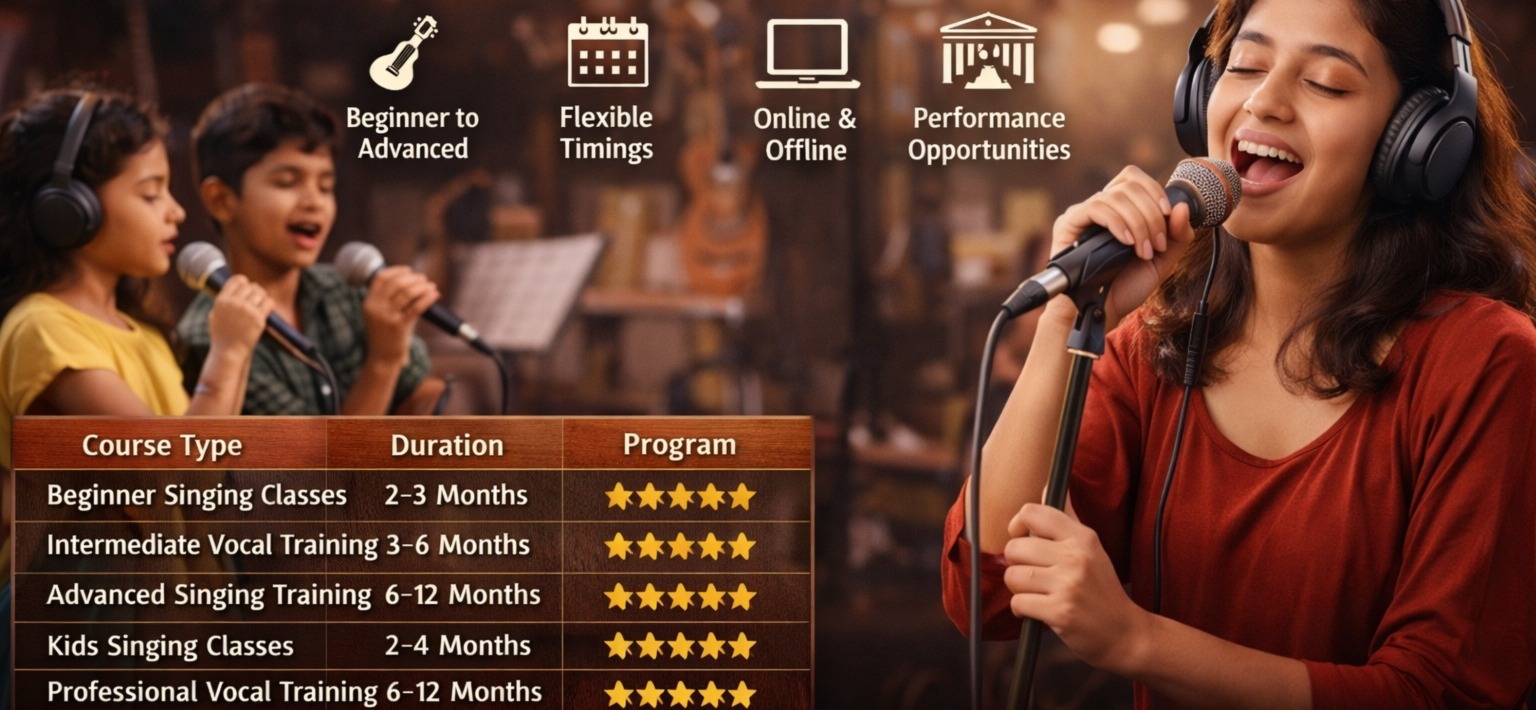
| Course Type | Duration | Skill Level | Learning Mode |
|---|---|---|---|
| Beginner Singing Classes | 2–3 Months | Beginner | Offline / Online |
| Intermediate Vocal Training | 3–6 Months | Intermediate | Offline / Online |
| Advanced Singing Training | 6–12 Months | Advanced | Offline / Online |
| Kids Singing Classes | 2–4 Months | Beginner | Offline |
| Professional Vocal Training | 6–12 Months | Advanced | Offline / Online |
Online and Offline Singing Classes
Many vocal training institutes near DLF Phase 2 offer both online and offline classes.
Offline classes allow students to interact directly with instructors and receive real-time feedback. Students also participate in group practice sessions and live performances.
Online classes provide flexibility for students who prefer learning from home. These classes include live virtual sessions, vocal exercises, and recorded practice materials.
Both learning formats can be effective depending on the student’s schedule and learning preference.
How to Choose the Best Vocal Training Near DLF Phase 2
Choosing the right vocal training class is important for effective learning. Students should first consider the experience and qualifications of the instructor.
A good vocal coach not only teaches singing techniques but also motivates students and helps them build confidence.
Students should also check whether the institute offers a structured course curriculum that covers both theory and practical training.
Another important factor is the availability of performance opportunities. Institutes that organize concerts or music events provide valuable stage experience for students.
Reading reviews and feedback from other students can also help in selecting the best singing classes.