Learning the Future, One Click at a Time
In today’s world, technology is all around us. From using Google Maps to asking Alexa to play our favorite song, we’re already living with Artificial Intelligence (AI). But how does it actually work? And why should school students learn about it so early?
Let’s explore how AI and Machine Learning (ML) are becoming the building blocks of modern education — and how they can shape young minds for the future.
What Is AI and Machine Learning?
Artificial Intelligence (AI) means teaching computers to “think” or “act” like humans. It helps machines understand speech, recognize pictures, make decisions, and even learn from their own mistakes.
Machine Learning (ML) is a part of AI that helps computers get better over time — just like we do through practice. For example, when YouTube keeps suggesting videos you like, that’s machine learning in action!
Why Should School Students Learn AI?
AI is not only for engineers or scientists anymore — it’s for everyone. The earlier students learn about it, the more naturally they’ll understand how the world is changing.
Here are some simple reasons why AI is important for students:
It builds problem-solving skills.
AI helps students think logically and come up with solutions in creative ways.
It boosts curiosity.
When children learn how voice assistants or robots work, they become more curious about science and technology.
It encourages creativity.
Students can design small projects — like chatbots or simple games — that make learning fun and hands-on.
It prepares them for the future.
Almost every field — medicine, farming, education, or entertainment — is using AI today. Understanding it will open new career paths.
How Can Schools Start Teaching AI?
Schools don’t need fancy labs to introduce AI. They can start with small steps:
Classroom discussions: Talk about how Google, YouTube, or self-driving cars work.
Coding basics: Use beginner platforms like Scratch or Blockly to make simple logic games.
AI clubs or activities: Let students build chatbots, explore image recognition, or analyze small data sets.
Practical examples: Show how AI helps in daily life — like predicting the weather or translating languages.
The goal is not to make kids programmers overnight, but to help them understand how technology thinks.
How AI Helps in Real Life
AI is already part of our lives in ways we don’t even notice:
When Netflix suggests movies you might enjoy.
When Gmail automatically filters spam emails.
When Google Maps finds the fastest route.
When your phone unlocks with your face.
Once students understand these examples, they realize AI isn’t scary — it’s just smart technology making life easier.
Learning with SuGanta Tutors
At SuGanta we believe that education is not just about marks — it’s about motivation, curiosity, and growth.
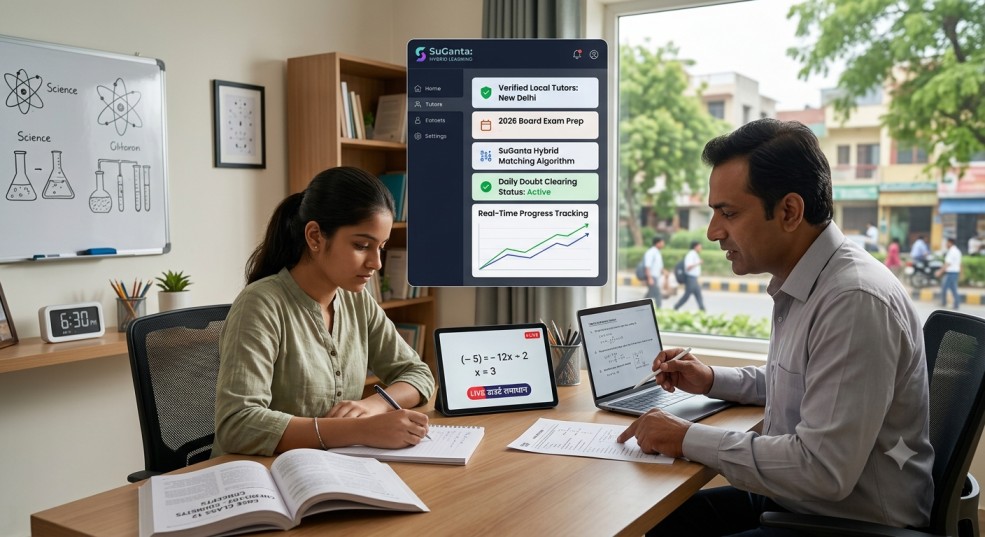
That’s why SuGanta connects students with verified, passionate tutors who help them learn real-world skills like coding, robotics, and AI in a fun, simple way.
If you’re a student who wants to explore new technologies or a parent looking for trusted teachers, check out our Perfect Tutors.
We’re not an institute — we’re a bridge between great teachers and eager learners.
The Future Belongs to Young Innovators
Children who start learning about AI today will become tomorrow’s leaders and creators. They’ll build smarter apps, design greener cities, and find solutions to global challenges.
AI isn’t replacing humans — it’s helping us think bigger and work smarter. The goal is to use technology responsibly, not fear it.
Final Thoughts
Artificial Intelligence and Machine Learning may sound like complex subjects, but for school students, they can be exciting, creative, and full of discovery.
With the right guidance, children can learn to build projects, ask better questions, and understand how the world of technology works.