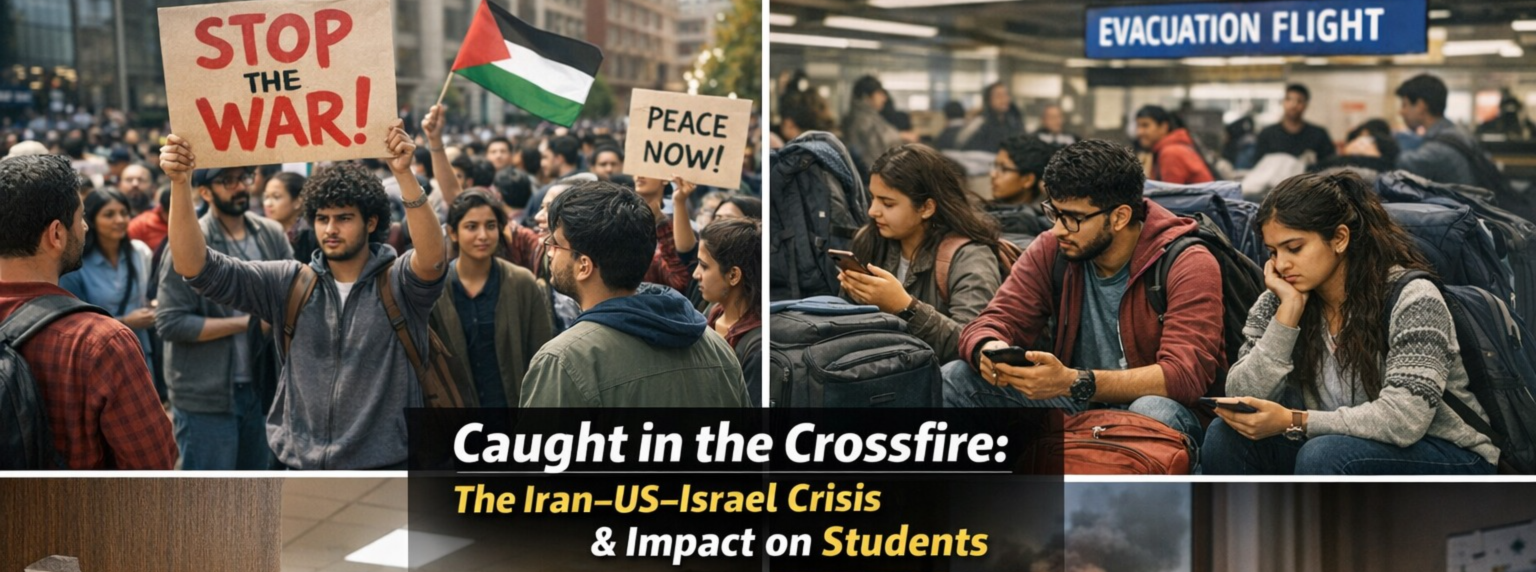
Conflicts between nations are never just political headlines — they ripple into classrooms, dorm rooms, and family living rooms. When military tensions rise between Iran, the United States, and Israel, real people feel the consequences: students lose study time, face travel chaos, worry about safety, and struggle with stress that affects learning. This blog explains, in straightforward language, what those impacts look like — especially for foreign students such as Indian students abroad — and gives clear, compassionate steps students, families, and institutions can take to stay safe and keep studying. Wherever useful, I’ll note how SuGanta Tutors can offer practical academic and emotional support during these times.
Below you’ll find: background context, concrete impacts on education and safety, how Indian students abroad are affected, university and government responses, practical safety and study tips, how tutoring and online learning fit in, long-term implications, and a helpful FAQ.
Note: this article pulls together reporting and academic analysis to explain real-time impacts (evacuations, travel disruptions, university actions) and longer-term effects (mental health, interrupted learning). For recent examples of evacuations and flight disruptions, see the news cited in the sections below.
1) Quick reality-check: why students are affected when geopolitics heats up
When missiles fly, the immediate headlines focus on military and diplomatic moves — but large-scale conflicts also create predictable secondary effects that touch every student’s world:
airports and airspace close or reroute flights, disrupting travel and internships;
universities may suspend classes, move to online learning, or evacuate international students;
students living away from home (including thousands of Indian students across the region) can become stranded, anxious, and cut off from family support;
conflict increases stress and mental-health problems, which lowers concentration, attendance, and academic performance; academic studies of wartime education document this clearly.
Those are not abstract ideas — they change day-to-day study routines, internship plans, exam schedules, and a student’s sense of safety.
2) Direct impacts on students’ safety and daily life
Disrupted travel and sudden evacuations
When tensions escalate, airlines cancel or reroute flights for safety. That causes immediate logistical problems: students cannot return home for breaks, must extend or cut short semesters, or find alternate — often expensive — routes. In recent reporting, airports and flights linking through the Gulf and Middle East faced cancellations, affecting students and families.
For some students, the situation becomes dire: there are documented cases of Indian students stranded in Iran asking for evacuation assistance as hostilities intensify. Families often rely on media reports and government advisories while trying to coordinate returns.
Campus safety, protests, and potential clashes
Beyond front-line zones, campuses worldwide can become sites of protest or heightened security. Student demonstrations, police responses, or tensions between campus groups can lead to class cancellations, arrests, or the suspension of on-campus activities. Universities sometimes lock down or close buildings temporarily to protect people and property; this disrupts classes, labs, and exams. News outlets documented major campus protests and administrative responses in past cycles of the Israel–Gaza crisis — a pattern that repeats whenever regional conflict spikes.
Interruptions to in-person learning and lab-based programs
Fields that need labs, clinical placements, fieldwork, or studios suffer more during conflicts. When campuses close or movement is restricted, students studying medicine, engineering, performing arts, and other hands-on programs lose critical practical hours. Studies of wartime education show that replacing practical learning with online options is rarely equivalent — and access to stable internet may be problematic in crisis-affected areas.
Mental health — the invisible but powerful effect
Stress, grief, and uncertainty reduce the ability to learn. Research into the impact of the Gaza war and similar conflicts shows clear links between conflict exposure and anxiety, depression, disrupted sleep, and lowered academic engagement. Even students far from the front lines can be affected through social media, community pressures, and campus tensions. Universities increasingly recognize this, but services are often overwhelmed during major crises.
3) How Indian students abroad are specifically affected
Many Indian students study across the Middle East, Israel, Iran, and regions linked through Gulf air routes. When conflict escalates, they face several specific challenges:
Stranded or delayed returns: Sudden flight cancellations and closed airspace mean students may be unable to leave the country quickly; families back home scramble for updates. Recent reporting showed Indian students seeking evacuation assistance from Iran as tensions rose.
Disrupted studies and internships: Practical placements (in hospitals, labs, or companies) may be canceled or paused; online alternatives are not always possible or credited by home institutions.
Visa and residency problems: In hostile conditions, visa renewals, embassy processing, or travel documents can be delayed, complicating a student’s legal status. Governments sometimes suspend services or operate reduced hours.
Family pressure and financial stress: Families may ask students to return immediately, creating emotional strain and financial costs for unscheduled travel. Corporations and banks may also suspend services or transfers temporarily in volatile regions.
All this means Indian students and their families must watch official advisories closely, register with their embassy where possible, and plan alternatives for accommodation and study continuity.
4) How universities and governments respond — examples and options
Universities
Universities typically respond with combinations of:
emergency communications (hotlines, e-mails, web pages);
temporary class suspensions or immediate shifts to online learning;
physical security steps (restricted access, police presence); and sometimes
coordination with foreign ministries for evacuation support.
Some institutions have even suspended research collaborations or paused exchange programs during the conflict period. For example, wider academic boycotts and institutional reevaluations were reported and debated in the global academic community.
Governments
Foreign ministries issue travel advisories (avoid non-essential travel, register with embassy), organize evacuations when necessary, and help stranded nationals with consular support. India’s ministry and student associations have periodically called for evacuations or help in crises affecting students. These are important official channels for safety instructions.
Private sector
Large employers and educational platforms often restrict employee or student travel to affected regions; tech companies defer non-essential trips and issue internal advisories to staff working across the region. These corporate care measures impact internship and job opportunities for students in affected zones.
5) Learning continuity: how education adapts — and where it struggles
Online learning as an emergency fix — benefits and limits
Many universities switch to online teaching quickly to maintain learning continuity. This keeps lectures and some tutorials going, and it helps with assessments. But scholars studying wartime education stress that online formats cannot fully replace practical components (labs, clinical work) — and online learning depends on reliable electricity, internet, and quiet spaces, which are often unavailable during crises.
Assessment and accreditation challenges
When semesters are interrupted, universities must decide whether to postpone exams, modify grading policies, or grant extensions. Accreditation bodies and employers may need to accept altered transcripts or delayed graduations. These administrative choices affect students’ next steps (jobs, further study, visa applications).
Loss of networking and internships
Students lose in-person networking with professors and companies. Internships can be canceled or paused, meaning missed hands-on experience and lost income. This affects career readiness, particularly for students in vocational or professional programs.
6) Practical steps for students and families (safety & study plan)
If you are a student or a parent worried about safety and education during this conflict, here is a clear, prioritized checklist:
Safety first (immediate actions)
Follow official guidance: Register with your embassy/consulate and follow travel advisories for your nationality. Governments post the latest safety instructions and sometimes provide evacuation updates.
Keep emergency contacts ready: Local campus emergency numbers, the embassy helpline, family contacts, and your university international office.
Avoid high-risk areas: If protests or unrest are expected in certain neighborhoods, stay away and keep a low profile.
Plan evacuation options: Know nearest airports, alternate routes (overland to safer hubs), and whether emergency flights or charter evacuations are being arranged.
For continued studies (academic continuity)
Ask your university for documentation: Get official letters stating missed weeks/semesters; such documents help when applying for visa extensions or transfers.
Move studies online where possible: Maintain communication with professors, ask for recorded lectures, and request extended deadlines.
Keep learning practical skills remotely: For lab-heavy courses, ask about virtual labs, simulation tools, or deferred practicals. Where practicals are impossible, keep up reading and theory.
Protect your mental health: Use university counseling, helplines, or peer groups. Don’t suffer in silence — stress reduces learning ability.
Financial and admin actions
Notify banks and sponsors: If you are on scholarships or loan repayments, tell the relevant offices about disruptions.
Keep digital copies of documents: Scanned passport, visa, university ID, and health insurance details — accessible offline if possible.
Explore temporary work or tutoring: If safe and permitted, remote freelancing or tutoring can offset unexpected expenses (SuGanta Tutors can help students prepare to tutor others online in subjects they know well).
7) How SuGanta Tutors can help — practical, human support
SuGanta Tutors (academic coaching and support) can be a useful partner during crisis times in these ways:
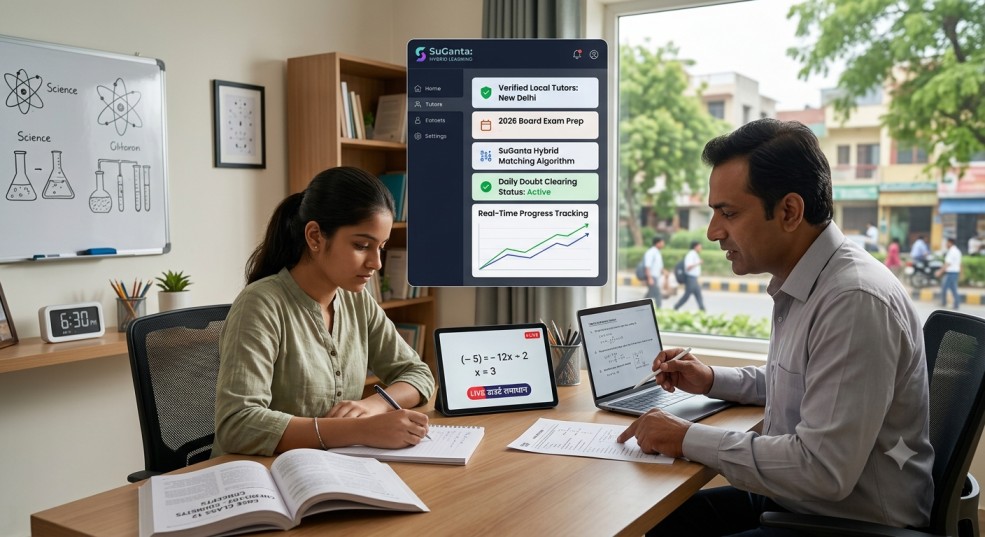
Rapid academic support: If classes are paused or you’re displaced, SuGanta Tutors can provide focused online lessons, exam preparation help, and personalized notes to keep learning on track. This is especially useful when universities move to remote instruction and students need structured guidance.
Board and coursework continuity: For pre-university or school students disrupted by cancellations, tutors can help maintain syllabus coverage, create catch-up plans, and prepare for delayed assessments.
Mental-health-aware teaching: Tutors can adopt gentler pacing, break work into smaller goals, and provide encouragement — small things that help students regain study momentum amid stress.
Practical skill training: If internships are lost, SuGanta Tutors can help students develop digital skills (basic coding, content writing, tutoring skills) that are valuable remotely and can be monetized if needed.
Parental liaison: Tutors can update parents on progress, provide study schedules, and recommend local resources for safety and wellbeing.
In short, a dependable tutoring partner can be the steady study-lamp during uncertain nights.
8) Mental health and community — what schools and parents can do
Conflict impacts are psychological as much as logistical. Practical, compassionate steps help:
Open conversations: Parents and teachers should invite students to share fears without judgement. Normalizing anxiety reduces shame and isolation.
Structured daily routine: Even small routines (wake up, study block, break, exercise) stabilize mood and learning capacity.
Access counseling: Universities should expand remote counseling and peer-support networks; parents should ask schools for referrals. Studies show counseling reduces dropout risk and helps academic recovery after disruption.
Limit social-feed exposure: Continuous news and social media increase stress. Encourage scheduled news checks rather than 24/7 feeds.
Community networks: Student unions, alumni associations, and embassy networks can offer practical help — transport, shelter, or verified information.
9) Longer-term implications for international education and students
Shifts in student mobility and program design
Sustained instability can reshape where students choose to study. Some universities may see declining applications from certain regions; others may create robust remote-learning pathways and international partnerships that de-risk study abroad.
Re-examination of partnerships and funding
Conflicts sometimes lead institutions to pause collaborations or funding ties. This creates complexities for research partnerships and exchange programs; students should watch for changes in fellowship availability or collaborative degrees.
Focus on resilience in curricula
Universities and schools will likely bake resilience into program design: flexible assessment, credit transfer options, and virtual alternatives for practical training will become more common.
10) Checklist: immediate action plan for students caught in conflict zones
Register with your embassy/consulate; check official social channels.
Contact your university international office; ask for emergency support and documentation.
Keep digital and physical copies of important documents.
Maintain study contact with professors — request recorded classes and extensions.
If safe, find local peer groups or counselors and limit social media exposure.
Explore remote tutoring or micro-skills (writing, coding, language tutoring) to remain productive — SuGanta Tutors can help design a plan.
11) Real-life examples and evidence — what research and reporting show
Reporting has documented Indian students stuck in Iran and appealing for evacuation as regional tensions increase. This highlights the real danger of being cut off when embassies and flights are overwhelmed.
Flight cancellations connecting through Gulf hubs disrupted travel logistics — a direct economic and safety consequence felt by students and workers alike.
Academic studies on the Gaza conflict document how prolonged conflict damages access to education, increases mental-health challenges, and forces makeshift shifts to online learning with uneven results. These studies underline that learning loss is not only short-term but can have long-term human-capital costs.
Universities have taken institutional decisions—closing campuses, shifting to remote delivery, or reconsidering academic ties—illustrating that higher education systems respond in significant ways to geopolitical crises.
12) Policy and education-sector recommendations (for institutions & governments)
Stronger emergency communication: Universities must maintain 24/7 hotlines and multilingual channels for international students.
Flexible accreditation and credit pathways: Accrediting bodies and partner universities should make contingency plans for interrupted practical training and provide credit alternatives.
Consular readiness: Governments should anticipate student flows and pre-position consular support or evacuation plans where large student populations exist.
Expand mental-health services: Crisis funding for counselors and remote psychosocial support is essential.
Financial safety nets: Emergency grants or loan forbearance for students affected by cancellations or stranded conditions.
Invest in resilient remote learning tools: Low-bandwidth options, offline content, and simulations for lab-based learning.
Frequently Asked Questions (FAQs)
Q1 — Is it safe for Indian students to remain in the region during the Iran–US–Israel tensions?
Safety depends on location and local conditions. Follow embassy advisories, avoid hotspots, and keep close contact with your university. If evacuation is advised, follow official procedures.
Q2 — What should I do if my university cancels my internship or placement?
Request an official cancellation letter, ask about remote or deferred alternatives, and use the downtime to build related skills (online courses, small projects). SuGanta Tutors can help design a study-and-skill plan to stay productive.
Q3 — Will online classes cover everything I miss in labs or clinics?
Not always. Theoretical parts can often be taught online, but hands-on practice usually needs in-person work. Ask your institution about deferred practicals, simulated labs, or partner institutions in safer regions.
Q4 — How do I manage my mental health during this stress?
Create routines, limit news exposure, keep social connections, seek counseling, and break study into small, achievable tasks. If you feel overwhelmed, contact university counselors or trusted helplines.
Q5 — Can tutoring help while classes are suspended?
Yes. Personalized tutoring helps maintain subject momentum, prepares you for delayed assessments, and offers emotional support through structured progress. SuGanta Tutors offers tailored plans for students needing academic continuity during crises.