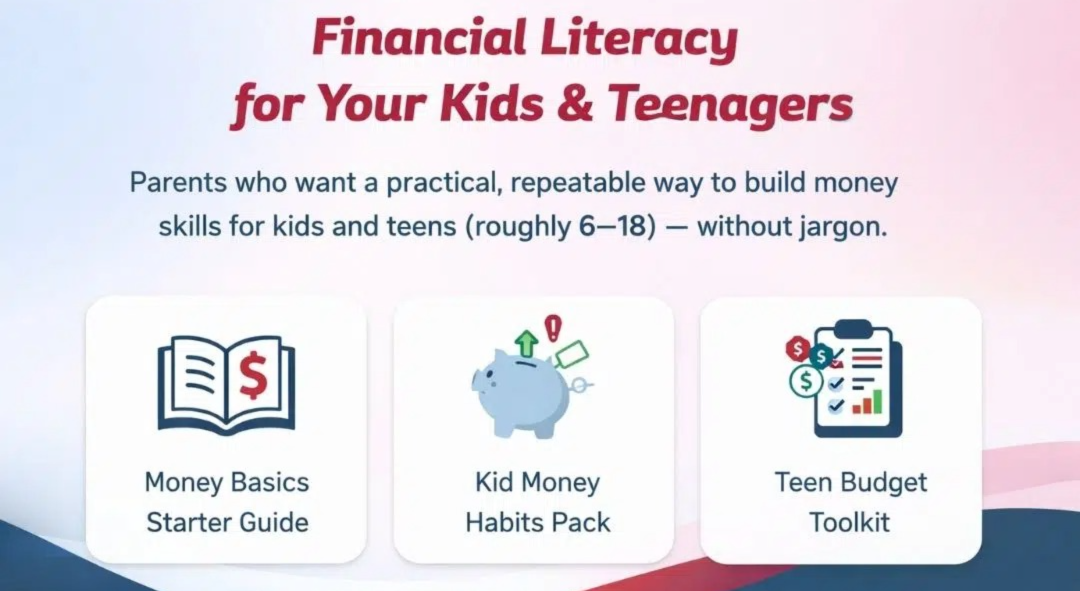
In 2026, teenagers are growing up in a world very different from the one their parents experienced. Money is no longer just paper notes kept in a wallet. It is digital payments, online shopping, subscription services, gaming purchases, freelancing income, side hustles, and even conversations about stocks and cryptocurrency on social media. Teenagers are exposed to financial decisions earlier than ever before, yet many of them are not formally taught how money truly works.
Financial literacy is no longer optional. It is an essential life skill.
Just as students learn mathematics to solve numerical problems and science to understand the physical world, they must also learn how to manage money wisely. Financial literacy helps teenagers make responsible decisions, avoid common financial mistakes, and build a secure future. In this detailed 2026 guide, we will explore what financial literacy means, why it matters for teenagers, the key concepts they must understand, common money mistakes to avoid, and how platforms like Suganta Tutors can help young learners develop strong financial knowledge in a structured and practical way.
Understanding Financial Literacy in Simple Words
Financial literacy means understanding how money works in real life. It is about knowing how to earn, save, spend, manage, and grow money responsibly. It includes learning how banks operate, how interest works, how to create a budget, and how to make smart financial choices.
For teenagers, financial literacy does not start with complicated investment strategies. It begins with simple habits. It may start with managing pocket money, saving for something important, or understanding the difference between a need and a want.
In 2026, financial awareness must also include digital knowledge. Teenagers use UPI, debit cards, online wallets, and shopping apps regularly. Without proper financial understanding, it becomes easy to overspend or fall into risky habits.
Why Financial Literacy Is Important for Teenagers in 2026
Teenagers today are not just students; many are content creators, freelancers, online sellers, or aspiring entrepreneurs. The internet has opened opportunities to earn money at a young age. However, earning money without knowing how to manage it can lead to financial stress later in life.
Financial literacy builds responsible habits early. When teenagers understand budgeting and saving from a young age, they develop discipline. They learn that money should be planned, not spent impulsively.
Another important reason financial literacy matters is compound growth. Even small savings, when invested wisely over time, can grow significantly. Understanding the power of compound interest at an early age gives teenagers a strong financial advantage.
Financial literacy also protects teenagers from debt traps. Many adults struggle with credit card debt or personal loans because they never learned proper money management. Early education prevents such problems.
In addition, financial awareness helps in making career decisions. Teenagers who understand salary structures, taxes, and long-term financial planning make more informed choices about their future.
Core Financial Concepts Every Teenager Should Understand
Income and Earning
The first step in financial literacy is understanding income. Income is money earned through work or business. Teenagers may earn through part-time jobs, internships, freelancing, tutoring, or small online businesses.
Understanding income also means realizing that money is connected to effort, time, and skills. This builds respect for financial value.
Budgeting and Expense Planning
Budgeting means planning how to use money wisely. Instead of spending randomly, teenagers should learn how to divide income into categories such as savings, daily expenses, and personal spending.
Tracking expenses helps students understand where money is going. When teenagers see how small daily expenses add up, they become more mindful of spending.
Budgeting is not about restriction. It is about control and awareness.
Saving and Emergency Funds
Saving money creates financial security. Even small savings build confidence over time.
Teenagers should learn to set financial goals. It may be saving for a gadget, a course, or a future trip. Goal-based saving creates motivation.
They should also understand the concept of an emergency fund. Unexpected expenses can arise at any time, and having savings reduces stress.
Understanding Banks and Interest
In 2026, digital banking is common. Teenagers must understand how savings accounts work, how interest is calculated, and how online banking functions.
Interest is the extra money earned when money is kept in a bank or invested. Understanding how interest works builds awareness about long-term financial growth.
They must also learn safe digital practices to protect bank details and avoid scams.
Introduction to Investing
Investing may seem complicated, but basic understanding is important. Teenagers should know about:
Stocks and shares
Mutual funds
Systematic Investment Plans (SIP)
Risk and return
Long-term vs short-term investment
They do not need to start investing immediately, but knowing these concepts prepares them for adulthood.
Common Financial Mistakes Teenagers Make
Without proper knowledge, teenagers often make financial mistakes.
One common mistake is impulsive spending. Online shopping platforms and instant payment methods make it easy to buy things without thinking.
Another mistake is ignoring savings. Many teenagers focus on spending earnings rather than saving a portion.
Some young individuals get influenced by social media trends and invest blindly without research. Financial literacy teaches careful evaluation before making decisions.
Learning about money early prevents regret later.
The Role of Parents in Financial Education
Parents play a crucial role in shaping financial habits. Financial education should begin at home.
Instead of simply giving pocket money, parents can discuss how household expenses work. Explaining electricity bills, grocery budgets, and monthly savings teaches real-life lessons.
Encouraging children to manage their own small budgets builds responsibility.
Open conversations about money reduce confusion and build confidence.
How Suganta Tutors Supports Financial Literacy Development
Modern education must go beyond textbooks. Life skills such as financial literacy are equally important as academic subjects.
Suganta Tutors understands the importance of practical knowledge for teenagers. Through structured learning programs and experienced mentors, Suganta Tutors helps students understand financial concepts in a simple and relatable manner.
The teaching approach focuses on real-life examples. Instead of only theoretical definitions, students learn how budgeting works in everyday situations. They learn about saving goals, investment basics, and responsible money management.
With verified teacher listing, parents can connect with qualified educators who guide teenagers step by step. Suganta Tutors ensures that financial literacy education is safe, structured, and practical.
Through interactive sessions and online classes, teenagers can learn financial concepts comfortably and confidently.
Digital Finance Awareness in 2026
Digital payments dominate everyday life in 2026. Teenagers regularly use UPI, debit cards, online wallets, and subscription services.
Understanding digital finance safety is essential. Teenagers must learn how to:
Protect personal banking details
Recognize phishing scams
Avoid fraudulent schemes
Spend responsibly online
Financial literacy includes digital safety education.
Financial Literacy and Entrepreneurial Thinking
Many teenagers dream of starting businesses or side hustles. Financial literacy helps them understand profit, loss, cost management, and pricing.
Even small entrepreneurial activities, like selling handmade products or offering online tutoring, teach valuable money lessons.
Understanding how to reinvest earnings and manage expenses builds an entrepreneurial mindset.
Long-Term Benefits of Financial Literacy
Teenagers who understand financial principles early grow into confident and responsible adults.
They manage expenses wisely. They avoid unnecessary debt. They plan investments carefully. They feel secure about their financial future.
Financial literacy reduces stress because individuals feel prepared to handle money decisions.
Frequently Asked Questions
At what age should teenagers start learning financial literacy?
Teenagers can start learning basic financial concepts around the age of 12 or 13. Simple budgeting and saving habits can begin even earlier.
Is financial literacy only important for business students?
No. Financial literacy is important for every individual, regardless of career choice. Everyone earns and spends money.
Can financial literacy be taught through online classes?
Yes. Structured programs like those offered by Suganta Tutors provide practical and easy-to-understand financial education through interactive online sessions.
Should teenagers start investing immediately?
Teenagers should first focus on understanding investing basics. Knowledge and awareness are more important than rushing into investments.
How can parents encourage financial responsibility?
Parents can involve teenagers in budgeting discussions, encourage savings goals, and openly discuss money decisions.
Final Thoughts: Building Financial Confidence in 2026
Financial literacy is not just about numbers. It is about responsibility, planning, and smart decision-making.
In 2026, teenagers face more financial choices than any previous generation. Teaching them how to manage money wisely gives them independence and confidence.
With structured guidance from Suganta Tutors, supported by verified teacher listing and practical online classes, teenagers can develop strong financial habits that last a lifetime.
When young minds understand the value of money, saving, investing, and planning, they do not just build wealth. They build security, confidence, and a successful future.
Financial literacy is not a luxury skill.
It is a life skill that every teenager deserves to learn.